You say you want a revolution?

There are a lot of things I say that I want to see changed. About the world. About myself. And probably about you, if I’m honest.

I haven’t exactly been shy about sharing my exhortations about innovation, leadership, new ways to market, my desire for a more compassionate universe, the urgent need for creative solutions to societal problems and on and on. I do this in small group conversations, from a stage, on my blogs and through various social media.

I’m often that annoying guy who posts motivational sayings on Facebook or Twitter. I regularly share inspiring stories of transformation or enlightenment–particularly if they involve me. I’ve rarely met a Buddha or Maya Angelou quotation that I didn’t like.

Yes, I say quite a bit. I’ve intellectualized all manner of approaches, frameworks and models that hold the potential for personal, organizational and societal transformation.

Unfortunately, I’m rarely that good at the doing part.

If you are anything like me, it’s easy to take the moral high ground from the cocoon of social media or by hiding behind the mutually reinforcing beliefs of our various tribes. It’s simple enough to nod self-righteously in the warm bath of confirmation bias and pontificate endlessly about what everyone else needs to do.

We say we want a revolution.

And yeah, we’d all love to see the plan.

But at long last I’m awakening to the reality that beliefs are cheap currency. That knowing something is just the warming up part for the practice of doing. That planning is helpful, but extremely over-rated.

The world doesn’t have a shortage of well-intentioned people. Awareness of our problems is rarely the scarce commodity.

What we need is a lot more action. We need to get proximate and take the plunge.

I hope you’ll join me.  What better time than now?
It’s almost always easier to do nothing

Let’s face it, there are days when getting up off the sofa and heading out the door feels like a big deal.

But finishing that draft, shipping your project, abandoning the usual in favor of the innovative, exposing a new concept to the world? Well, that requires fortitude, vulnerability, risk, the willingness to smile at fear.

I’ve been part of management teams that observed, studied and endlessly re-worked their plans while the competition sped past them.

I’ve become stuck in a swamp of procrastination, worried about abject failure or even the chance that people might see the (many) chinks in my armor.

I’ve sat at the bedside of a dying parent, afraid to tell them what I really felt for fear that I couldn’t handle the overwhelming emotions.

It’s almost always easier to do nothing.

Until it isn’t.

do-nothing

Dust obscuring the lens

If our camera lens is covered by dust we don’t keep relentlessly snapping photos if we actually care about the ultimate quality of the shots.

If our air conditioning filter has become clogged we realize that turning up the fan speed or lowering the thermostat is not the smartest way to get the desired coolness.

If a traffic jam slows our progress stepping on the gas or leaning on the horn doesn’t get us there any faster.

When frustration strikes, when obstacles manifest, when our path becomes less than clear, our habit may be to step on the gas, get louder or grasp the wheel more tightly. That’s a trap.

It may seem counter-intuitive to go slow to eventually go fast. Our conditioning may prevent us from realizing that investing the time to achieve clarity before we plow ahead is the far wiser choice.

For most us, wiping the dust from our camera lens’–or changing the filters in our HVAC systems–seems pretty straight-forward with an obvious and immediate benefit.

Why then is it so hard to do the same with our thinking and with the work that really matters?

aaeaaqaaaaaaaaz9aaaajgyxmddiyzvilwm4ngutnde3zi05mjzklwzkztnlymi4mdc3za

Passionate bystanders

Social media has done a lot of things–some of it positive and profound.

As social media has accelerated the dissemination of information, connected people across the globe in previously unimagined ways and literally fomented revolutions, it’s also provided a dramatically amplified megaphone for the critic, the judge, the troll and those long on opinion and short on facts. In some cases, it’s given a platform to those who frankly don’t deserve it.

If you have a reasonable number of “friends” on Facebook–or follow even a moderately curated set of folks on Twitter–you regularly encounter people who are outraged at some situation in the world, take to bashing a hapless politician’s most recent gaffe, flog absurd conspiracy theories or merely engage in non-sensical rants.

Conversely, if you are anything like me, you frequently “like” numerous do-gooder causes and retweet items that coincide with strongly held beliefs and values. After all, there is so much the world needs to know and it reinforces the idea that I’m a worthy person by promoting what I see as my good works and holier-than-thou virtues.

It’s not hard to sense the strength of our convictions. Our enthusiasm is evident. Often, our world is clearly drawn in good or evil, black or white. And it’s obvious which side we’re on.

But so what? Who cares?

Just as we’d never directly confront that “idiot” driver who cut us off–but have absolutely no problem cursing them from the safety our car’s interior–we find it so very easy to be the voice of moral authority and the king or queen of self-righteousness from the protective cocoon of our social media account.

Teddy Roosevelt famously reminds us that “it is not the critic who counts”, that the credit belongs to those that actually do something. Passion is nice, but it’s the willingness to take action that ultimately makes the difference.

Having tools like social media to express our displeasure to more and more people and to relentlessly hone the image of who we hope to be in the world ultimately means very little.

Without putting ourselves out there, doing the work, getting proximate, we’re all just a bunch of passionate bystanders.

Let’s connect in the arena, rather than on the screen or from the stands.

fans.jpg

A version of this post originally appeared at http://www.stevenpdennis.com

Failure is an orphan

“Victory has a thousand fathers, but defeat is an orphan.”

– John F. Kennedy

If you’ve been on the receiving end of consulting firm or marketing agency pitches, perhaps you’ve noticed multiple firms taking credit for the same work.

Or maybe you’ve been part of an event celebrating the launch of an exciting new venture and witnessed how suddenly everybody wants to participate or to extol their contribution.

My personal favorite is the CMO who relentlessly bashed a new business idea we had, did absolutely no work on the project and then showed up uninvited to our launch PR event –which was in a different city than our headquarters–and managed to insert himself in between our CEO and the head of our new venture just as the press started snapping pictures. There he was the next day on the front page of Women’s Wear Daily and Ad Age beaming. And so it goes.

Of course when something fails, everyone scuttles like cockroaches when the lights come on. And it’s not typically not very hard to find someone to tell you that they knew what a stupid idea it was all along.

But when was the last time you celebrated a noble failure?

When was the last time someone in your organization got promoted or received a bonus because they were willing to take a smart risk, rather than sitting back until it became obvious or completely safe to act.

Conversely, when when the last time a Board fired a CEO for moving too slowly to counter-act industry disruption or for not doing enough experimenting?

Yes, there are plenty of ill-conceived ventures that should never have seen the light of day or should have been approached in a fundamentally different way.

But I’d wager there are far more projects that should have been started, but weren’t because individuals or organizations were too afraid of failure.

Without the risk of failure there is no innovation. And without innovation you and your company are likely toast.

In reality failure needs more friends, more cousins, more Godfathers, more parents.

It’s time to embrace experimentation, not resist it.

It’s time to adopt failure, not shun it.

Oh, and pro-tip: This works for personal relationships as well.

quote-if-failure-is-not-an-option-then-neither-is-success-seth-godin-48-56-39

A post-fact era?

We buy products that we know don’t really work, but support a narrative about a hoped for self.

We select the fancier–and much more expensive–version of something in a vain (no pun intended) attempt to chase image over substance.

We pursue the latest bright and shiny object with no supporting data and little valid analysis because that’s where the crowd is moving and we want to appear relevant (or cool).

We tell stories about others that have little or no basis in reality out of fear, anger or desperation. And sometimes a frightening mix of all three.

We support candidates who tout demonstrably untrue accounts because they tap into deeply rooted frustration or our need to get even. Victim becomes persecutor.

Yes, we buy the story before we buy the product.

Of course, emotion often trumps purely rational thinking.

And it clearly would be wrong to say intuition never matters.

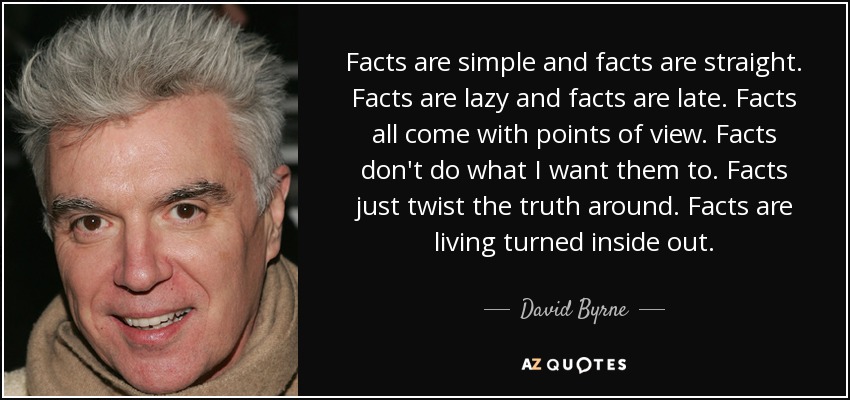
But are we really entering a post-fact era? Can we possibly be okay with that?

Facts may not do what we want them to, but we ignore them at our own–and society’s–peril.

Sometimes the best thing we can do is to call “BS”.

The best place to start is with ourselves.

And the best time to do it is right now.

quote-facts-are-simple-and-facts-are-straight-facts-are-lazy-and-facts-are-late-facts-all-david-byrne-45-48-11

This post has been updated from a version that originally appeared at http://www.stevenpdennis.com

Technique is overrated

Technically, Bob Dylan isn’t much of a singer. Neither is Jay-Z or Kanye. If Courtney Barnett turns out to be the next big thing it isn’t going to be because of her range or perfect pitch.

Kurt Cobain was certainly no Andres Segovia. Jimi Hendrix played his guitar upside down, backwards and strung “the wrong way.”

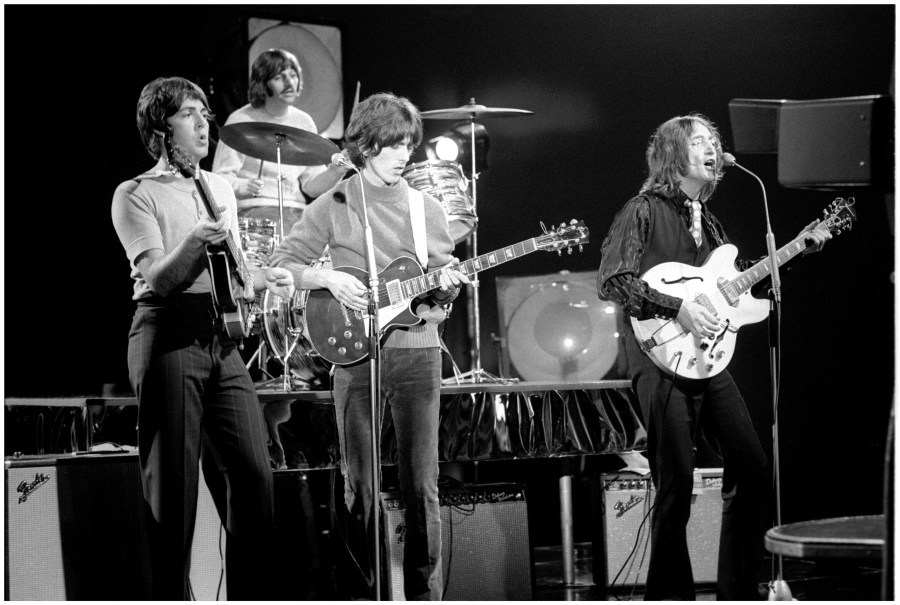
Not one of the Beatles could read sheet music. Neither could (or can) Duke Ellington, Eric Clapton, Jimmy Page, B.B King or Elvis Presley.

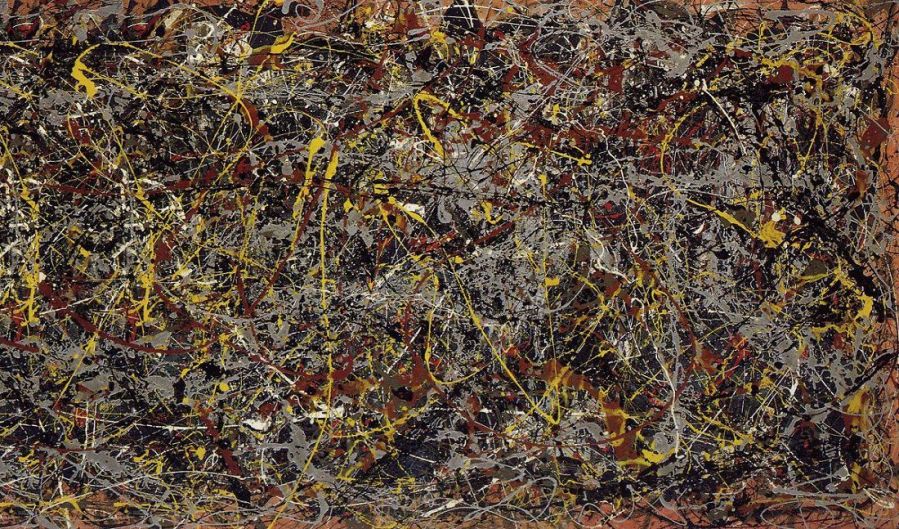
Growing up I can remember many times when my father would see some of the most influential Modern and Contemporary art and say “I could do that.” Perhaps he could. But he never did. Too bad, those millions would have come in handy.

Conventions, rules and technical standards obviously have their place. If you’re flying my plane or operating on my brain I’m counting on you to really know your stuff.

But for most of us, the work that matters doesn’t rely on a text-book approach, a finely tuned PowerPoint deck or a Board-certified anything.

The ability to evoke emotion, to connect, to create something meaningful, rarely requires mastery of an established protocol or any one tried and true skill or approach. The illusion that it does is what keeps us stuck.

If you’re waiting for perfection or just the right time, you’ll likely be waiting forever.

If you’re hoping that someone will tell you it’s okay to start, prepare to be disappointed. Chances are you’re going to have to choose yourself.

Do your research, study all you want and by all means, practice, practice, practice. Just know that you are going to have to start before you’re ready.

And if you really think you could do that, well then do it.

We’re waiting.

number-5

The nature of bullies

Bullying seems to be a growth industry.

While bullying is hardly new, the 24 hour news cycle seems to thrive on elevating bullies to star status. Various forms of social media makes it ever more easy to attack others from afar behind the seeming safety of a smart phone. Shockingly, it’s possible we may soon elect a bully-in-chief.

We know a few things about bullies.

Bullies appear strong, when at their core they are quite weak.

Bullies project confidence and control, when their behavior is in fact rooted in profoundly deep insecurity.

Bullies never assume accountability,

Bullies can’t work alone. They require someone to victimize, a target.

Bullies, left unchecked, can destroy lives and imperil cultures–big and small.

More times than not, when we confront bullies to their face, they cower. Yet often, once they are at a safe distance from their intended victims, the bullying starts anew.

Bullying will never go completely away. In fact it may well be part of the human condition. But there a few antidotes to bullying.

Whenever you can, take your ball and go home. First time, every time.

Speak out, challenge, refuse to tolerate bullying behavior wherever you encounter it.

Promote openheartedness as a counter-acting agent.

And, whatever you do, never put a bully in a position of responsibility.


Soul patch

I started with a small plot of land,

inherited it, really.

Before too long the soil became dry, cracked, brittle,

devoid of nutrients.

The surface became strewn with crushed beer cans,

long since drained,

the simple detritus of every day life.

Beneath the ragged crust worms churned and twisted,

seeking sustenance where there was none.

Seeds’ prayers for germination all went unanswered.

I started with a small plot of land,

battled it fiercely.

At times the sun beat down upon it,

the heat violent, unrelenting, without mercy

and nothing could find purchase.

Before long the frost came, savagery took root,

the hyenas’ cackles echoed throughout the night

until there was only surrender or fight.

I started with a small plot of land,

survived it, mostly.

With time, stubbornness punched itself out,

evil slowly acquiesced to goodness,

a dim light emerged.

Mercifully the aperture opened,

the soil got tilled,

new sources of water were found,

the unnecessary got thrown away.

Maybe, just maybe, something can grow here.

When the clock stops

At some point, the clock stops for all of us.

The big one, the permanent one, the one that is both definitive and defining, will likely halt on its own terms. Despite our best efforts, despite our wishes and hopes that it might be otherwise, it is largely an immutable force.

Yet my guess is you know people for whom the clock has stopped when they remain very much alive. Maybe you’ve been there. I know I have.

The stoppage can be brought on by hopelessness or by The Resistance. We can remain stuck in resentment or paralyzed by indecision. We can avoid when we need to confront, hide when we need to leap, or simply decide to ride out the real or perceived storm. We can be the critic opining from the stands instead of the one in the arena.

It’s sad when we don’t realize we have a choice. And it’s sadder still when we don’t even realize the hands of our clock haven’t moved at all for quite some time.

Yes, accidents, medical conditions or other situations totally out of our control can come into play. Sure, we can be trapped or stymied by others. But more times than not, we’ve chosen to be the victim, to live in the past, to refuse to walk through our discomfort, to be a consumer not a producer.

If I were to die tomorrow, I would want to be certain that I’ve taken full advantage of the precious time that I’ve been given. That we’ve all been given.

The poet says it better than I:

When it’s over, I want to say all my life
I was a bride married to amazement.
I was the bridegroom, taking the world into my arms.

When it’s over, I don’t want to wonder
if I have made of my life something particular, and real.

I don’t want to find myself sighing and frightened,
or full of argument.

I don’t want to end up simply having visited this world

Mary Oliver (When Death Comes)