A lot of oysters but no pearls

It’s worth remembering that generating lots of ideas doesn’t guarantee an innovative one will magically emerge.

It’s worth remembering that we can collect social media followers by the droves, but chances are only a handful will engage in an authentic way.

It’s worth remembering that we can be plenty busy and not necessarily be working on the few essential things that truly make a difference.

It’s worth remembering that we may claim a large number of acquaintances, but when it really counts, it’s far better to have that one friend who has the courage to tell you the truth when it’s most difficult–or who will unconditionally extend compassion when you are profoundly hurting.

Sometimes you need many, many oysters to be certain you will find a pearl.

And maybe that kissing a lot of frogs thing helps some people find their prince–or princess.

Most of the time, however, if we constantly remind ourselves that our intention should be more oysters, not more pearls, we might just save ourselves a lot of time, energy, distraction and pain.

This post was inspired by a 2014 post from my business blog which can be found at http://www.stevenpdennis.com.  

HT to Counting Crows for the title inspiration.

Start where you are

We humans are rather peculiar.

Many of us think our only way forward is from somewhere in the past. Our starting point is often stuck back in a time when we were laid off from our job, dumped by a lover, slighted by a friend or somehow or other left damaged and wounded on the side of the emotional highway.

Regret keeps the clouds from clearing, resentment keeps us trapped in a cage. If only those things had never happened…

Other times, our point of departure is set anywhere but today. We tell ourselves we will finally be happy when we find the perfect partner, get the bigger house, own a fabulous new car, receive the promotion we’ve always wanted. We define our okay-ness by clinging to the idea that we are defined by possessions and external forces. We grasp futilely to an idealized future.

We resist letting go of the past and moving on in the vain hope of relitigating events that didn’t go our way.

We resist accepting that the future is unknowable because of a pathological desire to be in control.

We resist the notion that we are good enough just as we are. And while none of us is ever truly and completely okay, we are all going to be fine.

We make ourselves crazy by being everywhere but right here, right now

As Pema Chodron reminds us: “when the resistance is gone, so are the demons.”

In fact, we can work with the good, the bad, the beautiful and the ugly. We can embrace self-compassion.

We must start where we are, not obsessing over our past mistakes, nor re-living our glory days.

We must start where we are, not fantasizing about some mythical future.

We can accept reality and move from there.

As it turns out, there is no other way that works.

Reasons to hurry

We dodge in and out of  traffic, roll through stops signs and pass aggressively on the right, all just to arrive at our destination a few seconds earlier.

We reflexively respond to a text, even while driving, despite the obvious dangers and the virtual certainty that the message is neither urgent nor important.

We sit in lines for days to be among the first to get a new iPhone.

We pack our schedules with mind-numbing activity, only to move from one meeting or event to the next, in a Tasmanian Devil like frenzy.

We eat most of our meals as if we were in some sort of qualifying heat.

We’re quick to interrupt.

And even faster to judge.

Just what exactly does all this rushing about and false urgency get any of us? An ego boost? A rush of adrenaline to make us feel more alive? A sense of importance?

Is there anything more going on in these instances but our pride or fear of missing out?

There are, of course, plenty of good reasons to hurry.

There are urgent and sometimes desperate situations which demand our attention right now. There are meaningful problems we all can help solve.

It may be as simple as calling that friend who needs to hear a compassionate voice.

It may be embracing forgiveness, rather than living in resentment and condemnation.

It may be tutoring an under-privileged child who needs help reading.

Perhaps it’s donating money to provide a safe place for victims of domestic violence to escape from their abuser.

The list of good and valuable reasons to hurry goes on and on.

And it doesn’t include cutting people off (literally and figuratively) or compulsively rushing to purchase some new gadget in the vain hope that it will truly make us happy.

But perhaps I’m too quick to judge?

The ways we betray

For most of us, I suspect betrayal typically connotes a major traumatic event. A partner cheats on us. A business associate steals from us. Someone leaks confidential data to an adversary or foreign government. A corporation fails to protect our credit card data or pushes unnecessary products en masse.

In these events trust is eroded or completely gone in an instant once the truth is brought into the light. We all know that these sorts of betrayals can have horrific consequences. The good news is many of us never experience betrayal with a capital B.

Other forms of betrayal are more common, and we can see them for what they are if we are mindful and pay close attention. They can often manifest gradually. They can be quite subtle as well. If fact it’s been said that “sometimes betrayal doesn’t scream, it whispers.”

The key to understanding betrayal, in my view, is to see that it is all about trust and its impact on vulnerable and compassionate connection. And trust has two key components. We all get that it’s about veracity, the simple need to believe that what’s going on is in fact true; that when we are in relationship with some individual or group we enjoy a shared reality. The other critical aspect is that trust involves personal responsibility.

It’s easy to understand how we can betray our partner’s trust if we directly lie to him or her. It’s simple to comprehend how when we fail to do what we promised we can let down individuals or teams.

What’s often harder is to see the insidious nature of betrayal. It’s very possible for both the perpetrator and the victim to not see what’s truly going on until it is too late. These more nuanced and gradual forms of betrayal can make both parties feel unsteady, confused, maybe even a bit crazy without the identification of the root cause.

In my experience, a sense of betrayal can build up over time through an accumulation of untrustworthy and unaccountable interactions: Not being reliable and consistent in how we show up in a relationship. Avoiding or deflecting in difficult situations. Failure to speak our truth. Blaming the other person for our failings. Saying one thing and doing another. Withholding love or affection to get what we want. An inability to own our actions and truly understand how they may have hurt another person.

Too often, trust is eroded by a thousand cuts.  And once lost, it can be difficult or impossible to repair.

Avoiding this type of betrayal is best assured through cultivating compassion, leaning into vulnerability, letting go of our need for control, speaking our truth openly and respectfully, and understanding at a deep level that our actions have consequences.

Once betrayal has occurred the work is even harder and the outcomes far less assured. A person who has felt the deep hurt of betrayal does not simply re-grant trust due to a few sincerely uttered “mea culpas” and a hearty “I promise to do better next time.” If only it were so.

Ultimately the trust that matters is earned back through doing the hard work to establish the confidence that what we say and do is not only true, but reliable and consistent. And that takes time and practice.

The other reality is that if we’ve betrayed someone our actions have emotionally injured them. Time is needed for healing.

There is no express lane to restoring trust.


What breaks your heart?

Everyday, if we allow ourselves, we are going to experience a full range of emotions; some intense, others minor and insignificant. And some of them are felt deeply and mindfully in true presence and awareness.

Others are reactions–habitual, triggered. And many them we experience in a flash. If we are not careful, we are dragged back into–and mired in–a regretful past; love lost, opportunities missed, silly mistakes, personal slights, envy and so on. On the other end of the spectrum we can easily be set adrift in worries of an impossible to know or control future. If you are anything like me, sometimes that means grasping the wheel that much tighter, radically overestimating our power.

At other times, when the feelings become too intense, we employ anger to mask them or turn inwards with deflection, self-loathing, avoidance and numbing. It often seems easier to occupy our worried, shame-driven minds by protecting our egos or distracting ourselves with mindless activities and pointless concerns.

If we’re feeling jealousy, the need to win, the urge to lash out, the desire to be right, there is a good chance we are in reaction, operating from a place of a wounded or needy ego.

If we find ourselves compulsively fascinated by reality TV, compelled to stay abreast of the latest comings and goings of celebrities, or merely repeating the same unworkable habits over and over, it’s likely we are avoiding the real work of the soul.

Once we go deeper, once we clearly see what breaks our heart, not in the romantic sense, but from a perspective rooted in understanding what substantively challenges our capacity to express our worldly unconditional love, extend compassion freely, act generously, live out our purpose joyfully and celebrate our shared humanity and connection.

When we comprehend what breaks out hearts we also get the keys to what lifts our spirits and drives how we truly wish to be in the world.

Whether we get upset by fighting things outside of our control (reality) or the random activities of people that have no bearing on anything substantive in our lives ( reality TV), the result is the same.

There is nothing wrong with accepting that this is just the human condition, the product of our past traumas, our monkey minds at work. Our hearts are not challenged, our egos are.

The key is to see it for what it is. Dance with it. Laugh at it and ourselves.

Then we get back to do the real work, the work of the heart and the soul, intentionally, with concentration, mindfulness and lovingkindness to ourselves and others.

open-heart

Trust the process

Last night my connecting flight from Heathrow to Johannesburg was delayed by 17 hours.

As the news hit the business class lounge about a dozen folks, myself included, leapt to their feet and descended upon the customer service counter which, as it turns out, was woefully under-staffed and apparently supported by a computer system powered by a steam engine. There were two agents working the desk and I was first in line.

40 minutes later I was still the first in line. When I was finally called up, for a good 45 minutes, the agent relentlessly pecked at his keyboard and made nearly a dozen calls trying to re-route me. Spoiler alert: it eventually worked.

As the time clicked by the customers behind me were, hmm, what’s the phrase I’m looking for? Ah, yes, “losing their sh*t.”

The entire time I waited I was treated to a chorus of deep sighs. Occasionally someone in the queue broke from their nearly contained agitation with an exasperated “this is unbelievable” or “you have to be kidding me” uttered to no one in particular. One (presumably normally charming) gentleman even passive aggressively exclaimed “this bloke has got to be the worst customer service agent on the planet!”

To be completely honest, I was hardly the perfect model of serenity. I was disappointed and frustrated. This WAS taking a ridiculous amount of time.

But a few things became clear. The delay was entirely out of my control. The British Airways system wasn’t going to miraculously improve just because I hoped it would. The agent was doing the best he could. I had done my part in stating my needs and wants calmly and respectfully.

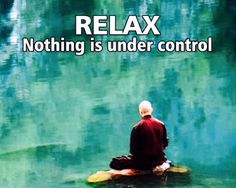
Trying to control the uncontrollable only served a singular purpose: to make me crazy and unhappy.

Once I saw that it became easier to relax into the situation. To loosen my grip on the steering wheel. To have compassion for the folks behind me and their struggles with reality and ego (I had certainly been there before many, many times). To just breathe and let things unfold as they would–and know I was pretty likely to come out okay on the other side.

Sometimes we don’t get to our desired destination on the route we had planned, in the manner we had expected or on the timeline we want.

Sometimes we wake up to the fact that we were chasing the wrong destination all along.

Trust the process. Enjoy the journey. Smile at your fear.

And don’t underestimate the power of metaphor.

0d8249329f457be448090f82655d7081


Hmm. Maybe I’m the problem?

For much of my life when things didn’t go my way my default mechanism was to find someone to blame. Sometimes I was aware of what was happening. But mostly it was a subtle reaction, a reflex that came from a lifetime of largely unconscious habituation.

It didn’t help that I was raised by someone who lived her life as a victim. As the saying goes, “if it’s not one thing, it’s your mother.”

To be sure, there were very real and painful reasons for her to feel victimized, but there were many others that were simply the by-product of mental illness. Either way, I didn’t have the best role model.

Yet regardless of whether we were parented well, had good teachers or benefitted from strong mentoring, playing the victim card is often the easy way out because it absolves us of accountability. I don’t have to actually confront my pain, shame or fear if I can shift attention to others.

I didn’t get that promotion because of office politics.

That teacher is picking on me.

I couldn’t close that deal because they didn’t give us a fair chance.

My family always treats my brother better.

I have to drink, don’t you understand how much stress I’m under?

We broke up because she didn’t really understand me or is just kind of crazy.

The election is rigged.

Well, maybe.

Certainly there are times when we are needlessly attacked or just flat out treated unfairly. But far more common are those times when we failed to look deeply at ourselves and our actions. Where we neglected to stay on our side of the street and understand our contribution to the outcome.

Stephen Karpman’s work on his eponymous drama triangle illustrates how this dynamic plays out for many of us. We bounce between victim, rescuer and persecutor (of ourselves and others), all the while failing to see our role in perpetuating the dysfunction, telling ourselves “if only they would change” everything would be fine.

It’s a con.

It would be far easier if I could avoid being the one to change. But the ONLY thing I can do is take responsibility for my stuff, share my truth, accept reality and do my work.

It’s been very humbling for me to become aware of and accept my role in creating or enabling so many problems over so many years.

It’s been harder still to admit that maybe I’m actually the problem.

But first comes awareness and then comes acceptance. Then it’s time for me to choose a different way to be in the world.

I wish there were an easier, softer way. But I got here as fast as I could.

preferred-victim-card-new


What’s worth fighting for?

Unless we live in certain parts of the world we get to pick most of our battles.

So it’s probably a good idea to decide what’s worth fighting for?

On my best days, I realize my list is pretty short:

  • Love
  • Compassion
  • Generosity
  • Connection
  • Justice
  • Confronting my pain, fear and shame
  • Acceptance of reality
  • Living in the present moment.

Of course, despite knowing this, I often convince myself that other things are important. I strap on my emotional armor and fight the useless fight.

The battles with our egos are ultimately both the most seductive and most destructive. We fight to be right, to win, to avoid our failings, to medicate our feelings, to control uncontrollable outcomes, to protect us from getting hurt. And to what end?

Our desire can betray us. Merely knowing our vulnerabilities is not enough.

We need to understand there is a profound difference between a reaction and a choice.

And if we decide that something–or someone–is truly worth fighting for, we go for it. We make mistakes, we embarrass ourselves (full disclosure: as I’ve already done this morning) and sometimes we’re going fall flat on our face.

But if we’re truly fulfilling our heart’s desire, then we pick ourselves up, recalibrate and just keep doing the work–smiling at our fears and our imperfect humanity.

455c562d86c059c21b538717592a1b61

The magical mystery powers of gratitude

For a long time the power of gratitude eluded me.

Sure, there were times when the position of privilege I was born into, or had attained, was obvious. I could appreciate a trip I took, a fancy new thing I bought, a great meal. I’d say “thanks” for a gift or a job well done or some little bit of kindness extended to me.

I suppose I mostly saw gratitude as transactional.

But if I’m honest, much of the time I was focused on what was lacking. The sense that I wasn’t achieving my potential at work and in my life was a near constant. My internal monologue was consumed by thoughts that I should possess more and sexier stuff, dominate my to-do list, achieve greater status, be in better shape, have everyone like me and on and on. I was feeling more than a wee bit entitled. I was rarely, if ever, satisfied.

In 2009, when I was still in the throes of a personal crisis that had rocked me to my core, the therapist I was seeing patiently listened as I recited yet another tale of woe. As I got to one of my favorite (and by then oft-repeated) complaints, he stopped me.  In that somewhat condescending voice all psychologists seem to employ he said “Steve, I wonder if would you be willing to tell me 30 things that you are grateful for right now, at this moment?”

I pushed back. “3o things? I don’t think so.” He encouraged me to just start.

The first few came easily. I had a nice house in a safe neighborhood, a decent amount of money in the bank, a great family. A few more things trickled on to the list with a bit more reflection.

When I stalled at about 8 or 9, my therapist made a few suggestions. “What about the way Charlie (my dog) greets you when you come home? How about the knowing smile on your daughter’s face when you make one of your dumb Dad jokes? How about the fact that you don’t have to worry for even one second whether you’ll have safe water to drink?

He paused to let that sink in. My throat grew tight. “Keep going” he said.

And I did. Spoiler alert: I had no trouble getting to 30.

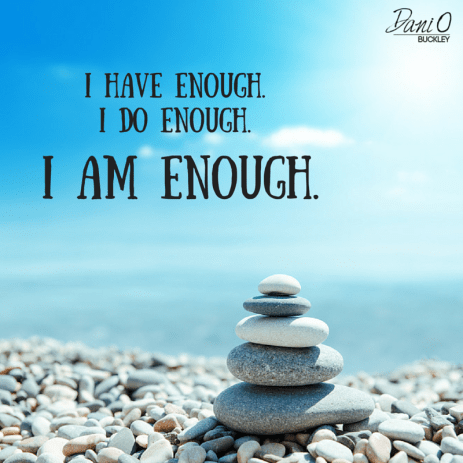
I left that session feeling better than I had in months. I came, albeit slowly, to see how gratitude is the antidote to my habituated negative thought patterns, the kryptonite to feelings of emptiness and loneliness. I adopted “I have enough, I do enough, I am enough” as a mantra.

My list of things that I’m thankful for is now much greater than 30. The list also includes a lot of actual human beings. It turns out gratitude is relational.

It also turns out gratitude has the power to heal. It turns out that extending gratitude to another person fosters connection–and we all need more of that. It turns out that just waking up today is reason enough to be grateful.

I wish someone had told me that earlier, but I got here as fast as I could.


On this day when many are celebrating Thanksgiving I’m grateful to my friend Seth who generously shares his Thanksgiving Reader. Check it out.

I’m also thankful that I have one friend in my life who will tell me the truth even when it hurts and who constantly challenges me to be a better person. And I’m grateful that I’ve been willing to (finally) tell her how much that means to me.
Monday-Mantra-i-have-enough-i-do-enough-i-am-enough.png

Out on a limb

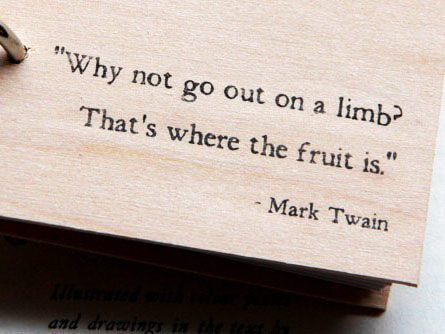
Twain famously said “why not go out on a limb? That’s where the fruit is.”

Of course, as we move further out on the limb the chances go up that it will break or we will lose our balance and fall. And not every limb can support the weight we carry–some of it accumulated over a lifetime.

And yet…

Innovation doesn’t spontaneously combust from simply having a new idea.

Organizations don’t transform through minor variations of what we’ve always done.

Movements don’t arise if we aren’t willing to aggressively challenge the status quo.

Spiritual growth doesn’t happen without confronting our bad habits and deepest fears.

True love is not possible without laying one’s soul bare and letting ourselves be truly seen by another human being.

The bad news is none of this might work. The good news is we’re still going to be okay. The better news is that we might receive, accomplish or feel something amazing.

Alas, we have to be willing to fail, to look foolish, to endure that gnawing pain in our hearts and that queasiness in our stomach. We have to do the work.

But it just might be worth it.

And the first step is figuring out what’s worth fighting for.

mark-twain-fruit